Lifecycle stage Customer
No-app wallet and loyalty
Timed offers: how urgency drives a visit this week
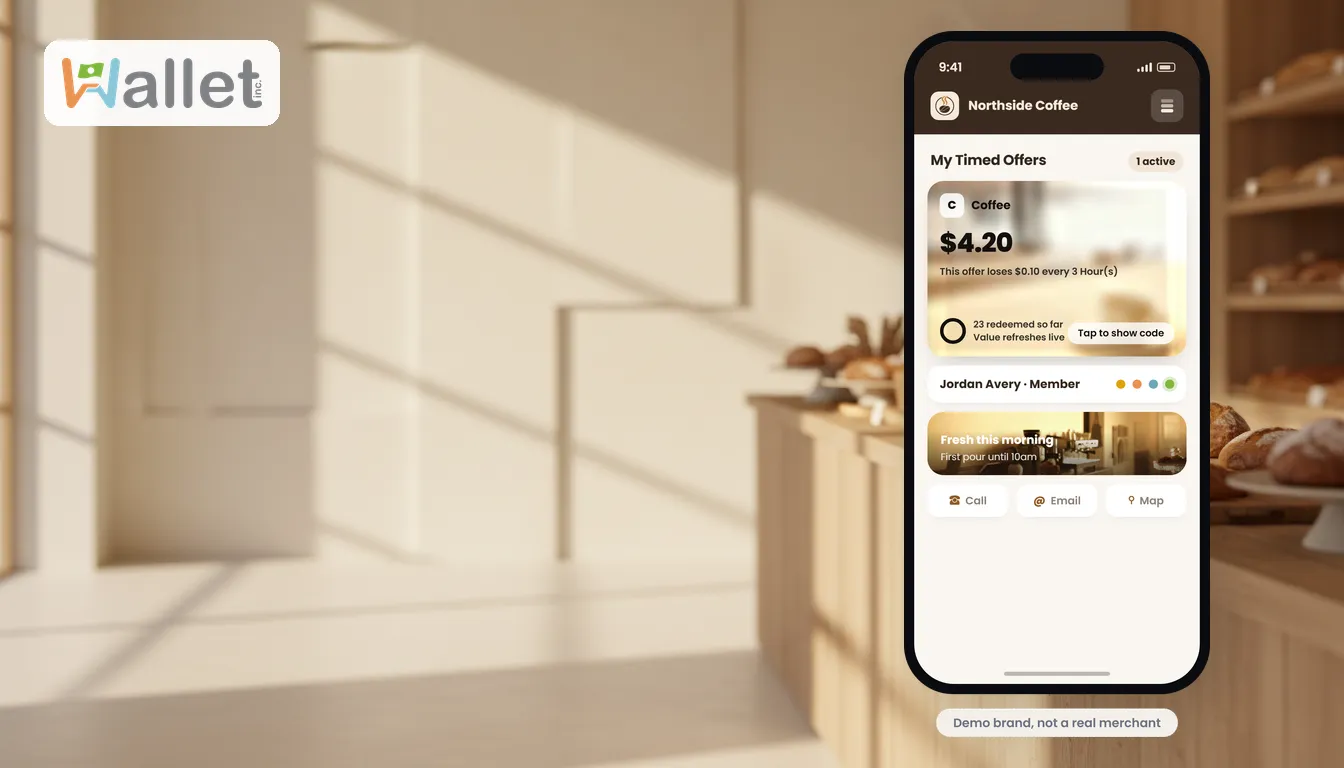
An open-ended discount is easy to ignore. “Ten percent off” with no deadline says “come in whenever,” which for a busy customer means “never get around to it.” A timed offer fixes that by adding the one ingredient that moves people from someday to today: a reason to act now. This guide covers what a timed offer is, why urgency works, the shapes it takes, when to use each, and how to run one without a printout or an app.
What a timed offer is
A timed offer is a promotion with a clock on it: a deal available only for a set window, or one whose value changes as time passes. The deadline is not a gimmick; it is the mechanism. It converts vague intent (“I like that place”) into a decision (“I should go before Sunday”).
Why urgency works
People defer low-stakes decisions almost indefinitely. A deadline collapses the timeline and forces a choice while your business is top of mind. Used honestly, urgency is not pressure, it is a nudge that helps a customer act on something they already wanted to do, before it slips off the list.
The word honestly matters. Urgency works because the deadline is real. Fake countdowns that reset, or “last chance” offers that run every week, train customers to ignore you. Use urgency sparingly and mean it.
The three shapes a timed offer takes
- A deadline. The classic: this deal ends Sunday. Simple and clear, good for filling a specific window.
- A decaying value. The offer is worth more now than later, the discount shrinks each day, or the reward is best if claimed today. This rewards fast action and creates a reason to move immediately.
- A flash window. A short, sharp burst, happy hour, a two-hour lunch deal, a one-day launch. Good for smoothing a slow shift or making an event feel like an event.
When to use one
- Fill a slow day or shift. A Tuesday-only or 2 to 4pm deal moves demand into the quiet hours.
- Launch something. A first-week offer makes a new item or location feel worth showing up for.
- Win back a lapsed regular. A short window says “we saved this for you, but not forever.”
- Move seasonal or perishable stock. A decaying-value offer clears it while it still has value.
How Wallet does it
Wallet delivers timed offers into the customer’s wallet on their phone and can announce them by text, so the deadline lands where the customer will actually see it in time to act. The offer shows its own clock, redeems in person with a scanner or a browser terminal (no point-of-sale integration needed) or online, and every claim is tied to a customer and a campaign, so you can see what the urgency actually drove.
Best practices
- Make the deadline real, and let it pass. That is what makes the next one work.
- Lead with the value and the clock, not the fine print.
- Give enough time to act, not so much they forget. A day or a few days usually beats two weeks.
- Do not run urgency constantly. If everything is “last chance,” nothing is.
Where this fits
Timed offers are a Motivate-stage tool: they turn a subscriber who likes you into a customer who shows up this week. They pair naturally with digital offers generally and with SMS as the delivery. Offers are part of Wallet’s Customer stage, so you build your audience free and turn them on when you are ready to start driving visits (monthly upgrades begin with a 14-day free trial).
A well-timed offer is the difference between a customer who means to come back and one who does. Start free.