Lifecycle stage Customer
No-app wallet and loyalty
What are digital offers? (And how they turn followers into customers.)
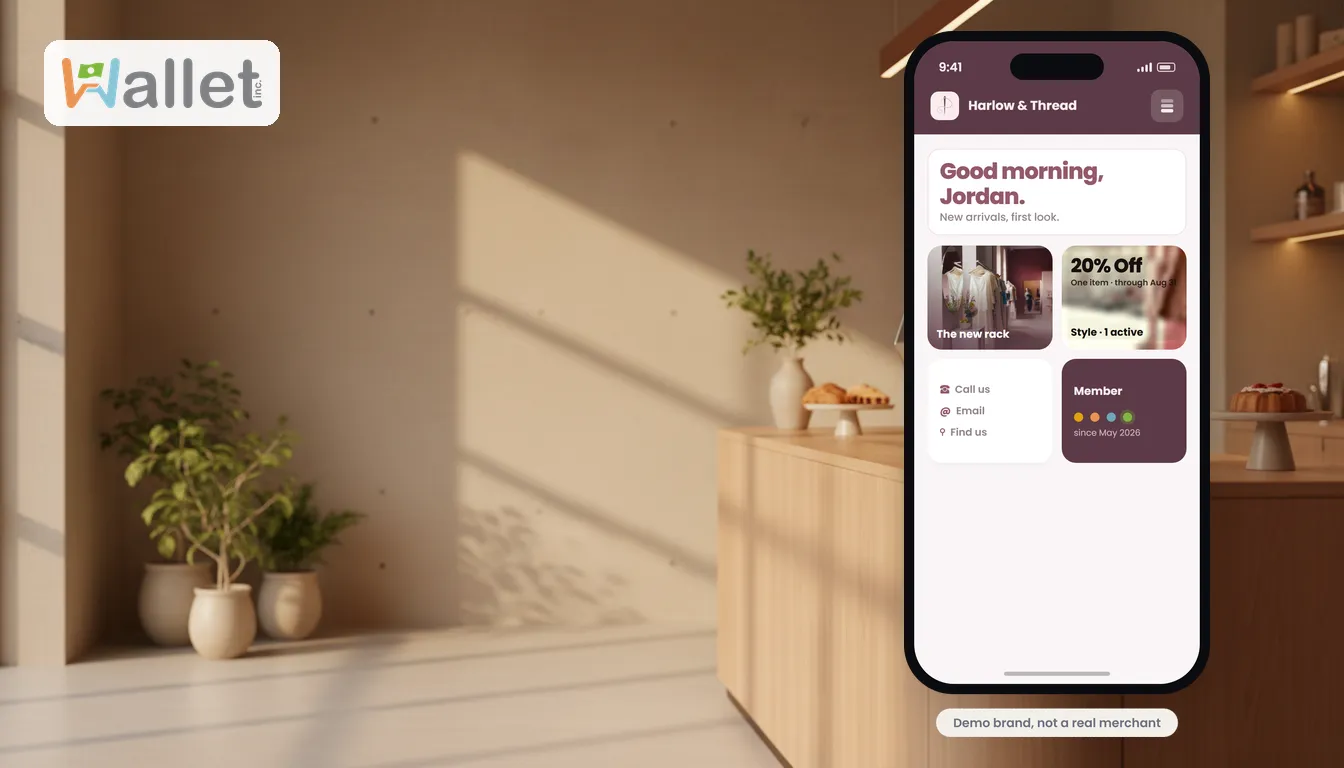
A digital offer is a promotion, a discount, a deal, a limited-time reward, delivered to a customer’s phone instead of printed on paper or buried in an email. That is the plain definition. The more useful thing to understand is where it fits: a digital offer is the nudge that turns someone who follows you into someone who actually shows up and spends. This guide covers what digital offers are, the main types and when to use each, how customers redeem them without an app, and what makes one actually convert.
What a digital offer is
A digital offer is any promotion you deliver to a customer digitally and they redeem in person or online: a percentage off, a dollar amount, a free item, a members-only deal, a time-limited price. Unlike a paper coupon, it lives on the customer’s phone, it can be personalized and tracked, and it does not depend on them remembering to bring anything with them.
The important shift is not that it is digital for its own sake. It is that a digital offer is attached to a customer you can identify and reach again, so a single redemption is also the start of a relationship, not a one-off transaction with a stranger.
Where offers fit: the “motivate” step
Most businesses think about marketing as two jobs: get discovered, and get people onto a list. Those are real, but they are not where revenue happens. Between having someone’s attention and having their money sits a third job, motivating the visit or the purchase, and that is exactly what an offer does.
In Wallet’s four-stage model the sequence is Attract, Engage, Motivate, Reward. You attract a visitor, you engage them so they are reachable, and then you motivate: you give them a concrete reason to come in this week or buy today. A digital offer is the sharpest tool for that step. Without it, a subscriber list is just an audience; with it, it becomes a sales channel.
The main types of digital offer, and when to use each
Not every offer does the same job. The common types:
- Standard offers. A straightforward deal, ten percent off, buy-one-get-one, a free add-on, available to your audience. Use these as your everyday reason to visit.
- Timed offers. A deal with a clock on it, or one whose value changes over time, built to create urgency. Use these to drive a visit in a specific window: a slow Tuesday, a launch, an end-of-season push.
- Vouchers. A single-use, trackable offer, closer to a ticket than a coupon: each one can be counted, so you know precisely how many were claimed and how many redeemed. Use these when you want clean attribution on a campaign.
- Store credit. A prepaid or credited balance a customer holds with you, a reason to come back and a smoother checkout. Use it to reward, to refund, or to pre-sell.
A good digital-offer tool lets you run all of these without a separate system for each.
How a digital offer works, end to end
- Create. You set the offer, the value, who can see it, and how long it runs.
- Deliver. It lands in the customer’s wallet on their phone, and you can point them to it with a text, a link, or a QR code. No app for them to download.
- Redeem. The customer shows the offer in person and a staff member marks it used with a phone scanner or a browser terminal, or it applies online. You do not need to integrate your point-of-sale system to start.
- Track. Because each offer is tied to a customer and a campaign, you can see what was claimed, what was redeemed, and what it drove.
That loop, deliver to the phone, redeem without friction, and measure, is what a paper coupon or a generic discount code cannot do.
What makes a digital offer actually convert
- One clear value. A confused offer gets ignored; make the deal and the action obvious.
- A reason to act now. Urgency, a timed offer or a genuine deadline, converts far better than an open-ended discount.
- Effortless redemption. Every extra step loses people; no app, no account, no printout is the point.
- The right audience. An offer sent to people who already know you, your subscribers, beats one blasted at strangers.
- A next step after redemption. The best offer does not end at the sale; it moves the customer toward coming back, which is the Reward stage.
Digital offers vs paper coupons vs a discount code
A paper coupon gets lost and cannot be measured. A generic discount code, the kind pasted into an online checkout, works on the web but tells you little about who used it and does nothing in person. A digital offer in a wallet does both jobs, in person and online, and keeps the customer attached to the offer, so redemption is also a data point and a relationship, not an anonymous markdown.
Why offers are stronger inside a wallet the customer keeps
An offer is only as good as its delivery. If it lands in an inbox it competes with a hundred other emails; if it is a code, it is easily forgotten. When the offer lives in a wallet the customer already keeps on their phone, the one they joined through your link-in-bio or QR code, it is right there when they are deciding where to go. And because they are a known customer, not an anonymous click, a redeemed offer can roll straight into your loyalty program, turning a motivated visit into a repeat one. See what a link in bio can become and how a loyalty program works without an app.
Getting started with digital offers
On Wallet, digital offers are part of the Customer stage: you build your audience for free, and turn on offers when you are ready to start motivating visits and sales. You can create standard and timed offers, issue vouchers, and manage store credit, deliver them by text, link, or QR, and let customers redeem with a scanner or a browser terminal, with no point-of-sale integration needed to begin.
Common questions
What is a digital offer? A promotion, discount, deal, or limited-time reward, delivered to a customer’s phone and redeemed in person or online, instead of a paper coupon.
How do customers redeem a digital offer? They show it from their phone and a staff member marks it used with a scanner or a browser terminal, or it applies at online checkout. No app is required for the customer.
Do I need a POS system to use digital offers? No. You can redeem with a phone scanner or a web terminal without integrating your point-of-sale, and integrate later if you want to.
What is the difference between an offer, a voucher, and a coupon? An offer is the deal; a voucher is a single-use, trackable version of it; a coupon is the old paper-or-code format. A digital voucher gives you clean counts of claimed and redeemed.
Are digital offers free? Building your audience is free. Offers are part of Wallet’s Customer stage, so you turn them on when you are ready to start motivating visits and sales.
The takeaway
You can attract an audience and get people onto a list, but revenue happens at the motivate step, when someone has a concrete reason to show up and spend. Digital offers are that reason, and they work best when they land in a wallet your customer already carries. See how digital offers work in a wallet.