Lifecycle stage Visitor
Concepts
What is a digital wallet for business (and what actually goes in it)
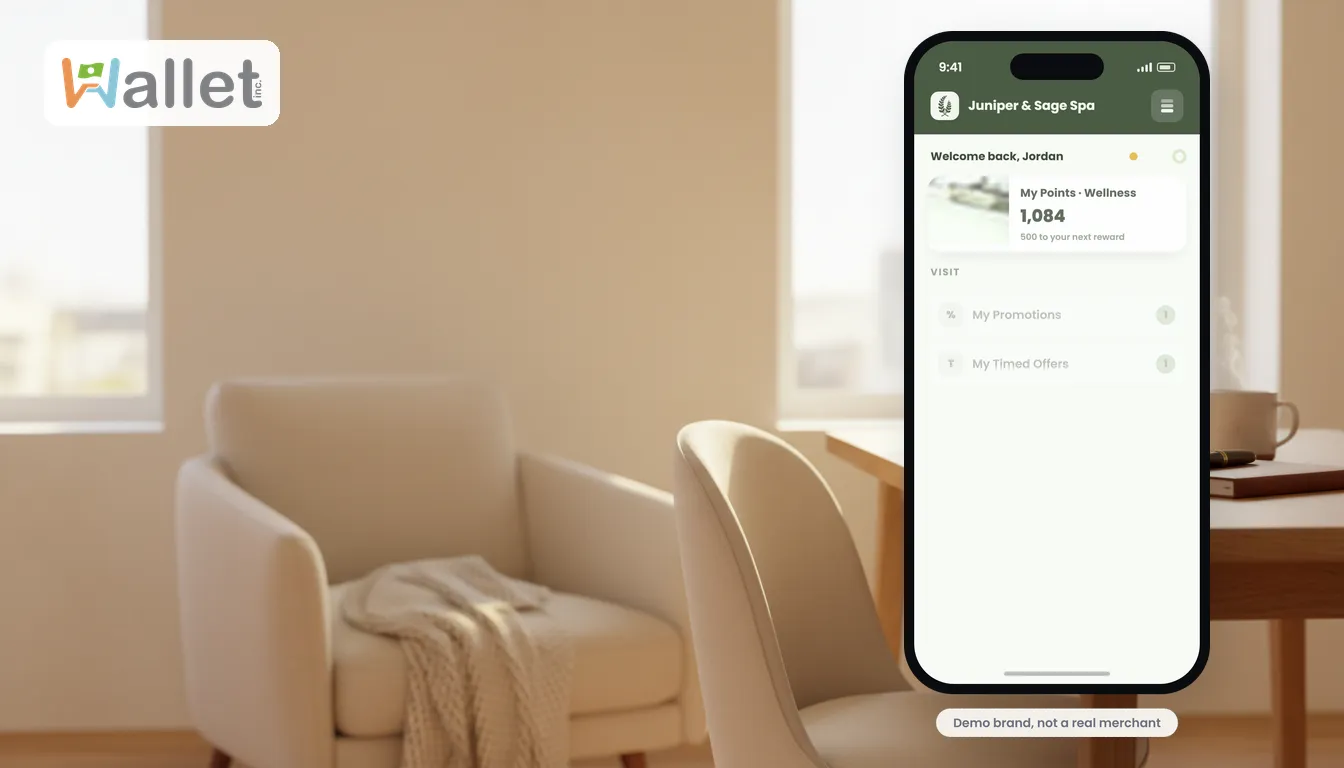
“Digital wallet” is one of those phrases that means two different things, and the difference matters. If you have ever tapped your phone to pay for coffee, you have used a payment wallet: Apple Pay or Google Pay, holding the cards you pay with. This article is about the other kind, the one a business gives its customers: a branded wallet that holds your offers, your loyalty program, and your contact details, and lives on the customer’s phone without an app. Here is what it is, what goes in it, and why it works.
A business digital wallet, defined
A digital wallet for business is your own branded space on your customer’s phone. Think of it as the card your business would hand out if a card could hold everything at once: your loyalty program, your current offers, a store-credit balance, a voucher, your phone number and address, all in one place, all skinned in your brand. The customer opens it from a link, and if they like it, they keep it on their home screen like an app they never had to download.
It is not a payment method. It does not replace your point-of-sale or take money. Its job is the relationship, not the transaction: giving a customer a reason to come back and an effortless way to act when they do.
What goes in it
The exact contents depend on what you run, but a business wallet typically holds:
- Your contact card. Tap to call, tap for directions, and save your details to the phone’s address book, so you are one tap away and, once saved, always in reach.
- Offers and promotions. Current deals the customer can see and redeem, including time-limited ones that count down.
- A loyalty card. Points that accrue or a membership with tiers, so a repeat customer becomes a recognized regular.
- Store credit. A balance the customer can see and spend, right in the wallet.
- Vouchers. A gift or promo the customer redeems by showing a code the business scans.
- Passes for Apple and Google Wallet. The essentials (store credit, a points or membership card, a voucher) can be added to the phone’s native wallet, next to the boarding passes and debit card.
You do not have to use all of it. A coffee shop might run points and offers; a hotel might run a membership and store credit. The wallet holds whichever pieces fit.
Why it lives on the phone, with no app
The reason a business wallet works is the same reason your customers keep their boarding passes and debit card on their phone: the phone is the one thing they always have, and the wallet is the one place they never clear out. Because it installs from a link and needs no app store, there is nothing standing between a customer and keeping it. And because it can hand off to the phone’s own tools, it does things a website cannot: drop your contact into Contacts, add an event to the calendar, open the dialer or maps.
For the deeper version of that idea, see what a mobile wallet does that a website can’t.
Who it is for
Any business whose customers come back: a cafe, a salon, a gym, a retailer, a restaurant, a hotel. If you have ever wished you had an app so customers could carry your offers and loyalty around, but never wanted the cost, the app-store gauntlet, or the download nobody completes, a digital wallet is the version that skips all of that. You get the app-like presence on the phone without building or maintaining an app.
Where it fits in the customer journey
A digital wallet spans the whole relationship. It attracts a visitor with an offer, keeps a subscriber engaged, motivates a customer with rewards, and recognizes a member with a card they carry. It is less a single feature than the container the relationship lives in, which is why the pieces inside it (offers, loyalty, store credit) are worth understanding on their own.
To see the pieces in action, look at how a loyalty card lives in Apple and Google Wallet, or how a digital business card saves itself to a customer’s phone.
Ready to see what yours would hold? Take a look.